
Oh, Pasta Carbonara! Just saying the name makes me want to grab my favorite skillet. This isn’t just any pasta dish; it’s a Roman masterpiece, a creamy dream made from just a handful of *seriously* good ingredients. Forget those heavy cream sauces you might see elsewhere – true Pasta Carbonara is all about eggs, Pecorino Romano cheese, that glorious cured pork called guanciale (or pancetta if you must!), and a good crack of black pepper. My Nonna used to make this on Sundays, and the smell alone was enough to make the whole house buzz with excitement. Trust me, once you nail this classic, it’ll be your go-to for a quick, impressive meal!
Why This Pasta Carbonara Recipe is a Must-Try
So, why should you trust *this* Pasta Carbonara recipe? Well, for starters, it’s the real deal! We’re sticking to the authentic Roman way, which means no cream – just pure, magical flavors. It’s ridiculously easy, even if you’re a total beginner. Honestly, you can whip this up faster than you can decide what movie to watch!
- Authentic Roman Flavor: We’re talking the true taste of Italy, no shortcuts.
- Super Speedy: Ready in under 30 minutes, perfect for busy weeknights.
- Incredible Flavor: The magic of crispy guanciale, salty Pecorino, creamy eggs, and peppery bite is just unbeatable.
- Simple Ingredients, Big Impact: You only need a few quality ingredients to make something truly special.
Authentic Pasta Carbonara Ingredients
Okay, let’s talk ingredients! This is where the magic of a true Pasta Carbonara really shines, and trust me, quality matters here. We’re keeping it simple, just like they do in Rome, so grab the good stuff!
- 1 pound spaghetti: Any good quality spaghetti will do, but a bronze-cut one holds the sauce a little better.
- 4 ounces guanciale or pancetta, diced: Guanciale is cured pork jowl and totally traditional. It renders this amazing, flavorful fat. If you absolutely can’t find it, good quality pancetta is your next best bet. Bacon just isn’t the same here, so try to find one of these!
- 2 large eggs: Freshness is key! We want these to cook gently into a creamy sauce, not scramble.
- 1 cup grated Pecorino Romano cheese: This is NON-NEGOTIABLE for true Carbonara! It’s a hard, salty sheep’s milk cheese that brings that authentic tang. Make sure it’s freshly grated from a block, not the pre-grated stuff that has anti-caking agents.
- 1/2 teaspoon freshly ground black pepper: Use whole peppercorns and grind them yourself right before you need ’em. The flavor is SO much better.
- Salt to taste: For the pasta water, mostly! The guanciale and cheese are already pretty salty.
Seriously, using these ingredients is going to make all the difference. Don’t skimp here if you can help it – the payoff in flavor is huge!
Step-by-Step Guide to Perfect Pasta Carbonara
Alright, let’s get this done! Making perfect Pasta Carbonara is all about timing and technique. Don’t freak out – it’s totally doable, and I’ll walk you through every single step. You’ll be amazed at how simple it is to create that restaurant-quality creamy sauce right in your own kitchen. The key is to be ready when your pasta is cooked, so have everything prepped!
Cooking the Pasta for Your Pasta Carbonara
First things first, get a big pot of water boiling. And I mean *big*. Salt it generously – it should taste like the sea! Drop in your spaghetti and cook it until it’s just al dente, meaning it still has a slight bite. While it’s cooking, make sure you scoop out about a cup of that starchy pasta water. This stuff is liquid gold for our sauce!
Preparing the Guanciale and Egg Mixture
While the pasta is doing its thing, get your guanciale (or pancetta!) diced up and toss it into a large skillet. Cook it over medium heat, stirring occasionally, until it’s beautifully crisp and has released all its yummy fat. Use a slotted spoon to fish out the crispy bits onto a plate, leaving that glorious fat in the pan. Now, in a separate bowl, whisk together your eggs and that finely grated Pecorino Romano cheese. Add your freshly ground black pepper, give it a good whisk until it’s all combined and looks like, well, golden goo!

Combining Everything for Creamy Pasta Carbonara
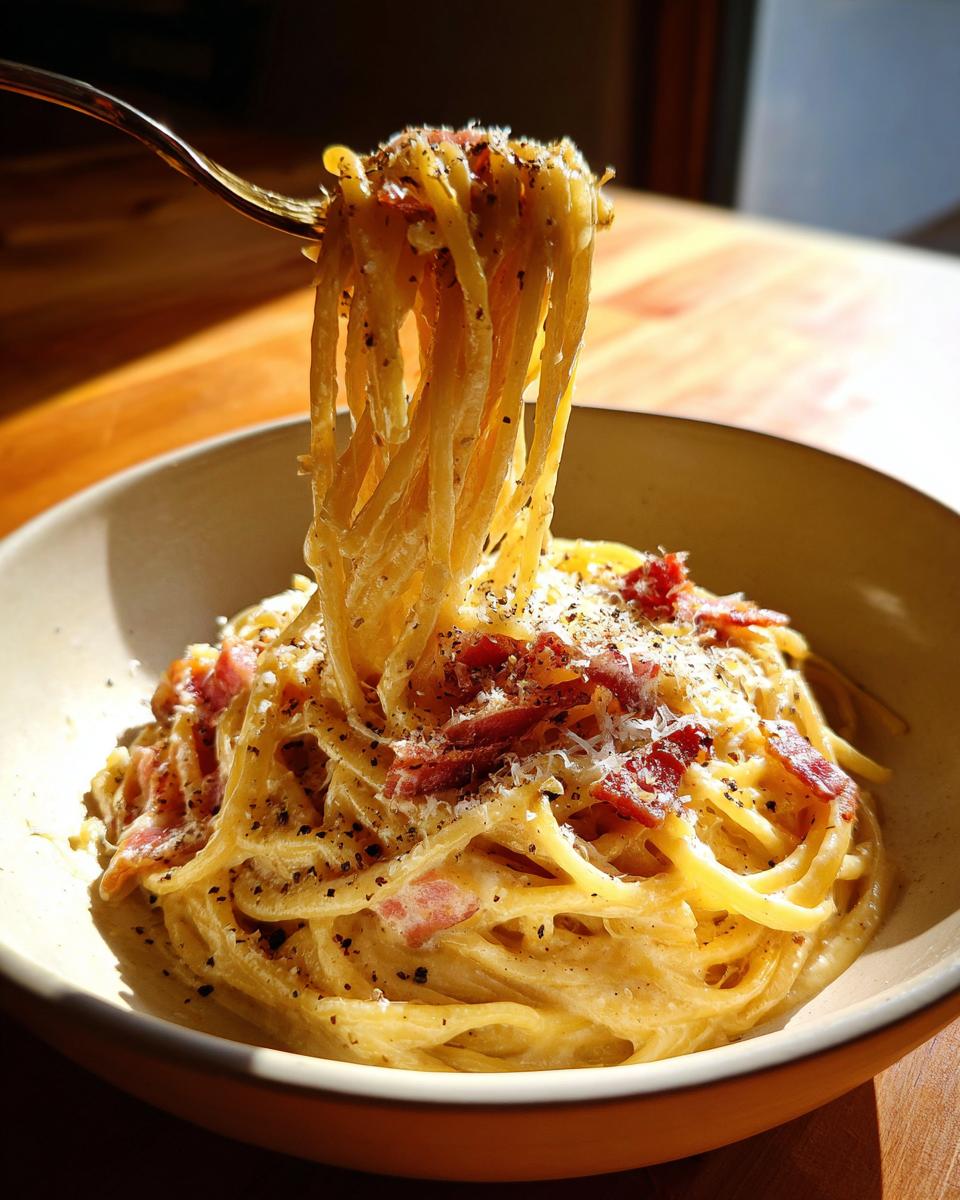
Okay, this is the crucial part, so pay attention! Your pasta should be ready. Drain it quickly and immediately add it right into the skillet with that rendered guanciale fat. Toss it around like crazy so every strand gets coated – this step is vital for flavor! Now, VERY IMPORTANT: Take the skillet OFF the heat. Seriously, remove it completely! Let it cool for about 30 seconds. Then, pour in your egg and cheese mixture. Toss, toss, toss like your life depends on it! The residual heat from the pasta and the pan will gently cook the eggs, creating that dreamy, creamy sauce without scrambling them. If it looks a bit dry, add a tablespoon or two of that reserved pasta water. Keep tossing until you’ve got a beautiful, glossy sauce coating every single noodle. Finally, toss in those crispy guanciale bits and give it one last mix. This whole process needs to be quick, so have your serving plates ready to go!
Tips for Achieving the Perfect Pasta Carbonara
Okay, so you’ve got the basic steps down, but let’s talk about how to make your Pasta Carbonara truly next-level. It’s all about a few key things that make the difference between good and *OMG amazing*. Seriously, these little tricks will save you from sad, scrambled eggs and give you that gorgeous, creamy sauce everyone dreams of.
- Ingredient Quality is King: I cannot stress this enough! Use the best guanciale or pancetta you can find, real Pecorino Romano (not the dusty stuff in a can), and fresh eggs. It makes a world of difference.
- Temperature Control is Your Friend: The biggest mistake people make is scrambling the eggs. Remember to take the pan OFF the heat before you add the egg mixture. The residual heat from the pasta and the pan is all you need. If you’re worried, let it sit for 30 seconds to a minute after draining the pasta.
- Pasta Water is Magic: Don’t you dare forget to save that starchy pasta water! It’s the secret ingredient that helps emulsify the sauce, making it creamy and luscious. Add it a little at a time until you get that perfect consistency. Think of it as your secret weapon for a silky sauce.
- Work Fast! Once the pasta is drained, you need to move quickly. Tossing everything together rapidly right after taking it off the heat prevents those eggs from cooking too fast and ensures the sauce coats every single strand of spaghetti beautifully. Speed is key to that perfect emulsion.
Ingredient Notes and Substitutions for Pasta Carbonara
Let’s chat about those key players in our Pasta Carbonara, because using the right stuff really matters! Guanciale is the authentic choice, my friends. It’s cured pork jowl, and it renders this incredibly flavorful fat that is just heavenly. If you absolutely *cannot* find guanciale, good quality pancetta is your next best bet. It’s cured pork belly, a bit less intense but still fantastic. Please, please try to avoid regular bacon if you can; it’s smoked and changes the whole flavor profile. For the cheese, it has to be Pecorino Romano. It’s sharp, salty, and made from sheep’s milk, giving that signature Roman tang. While Parmesan can work in a pinch, it’s milder and just not the same authentic bite. You’ll miss that classic Pecorino zing!
Serving and Storing Your Pasta Carbonara
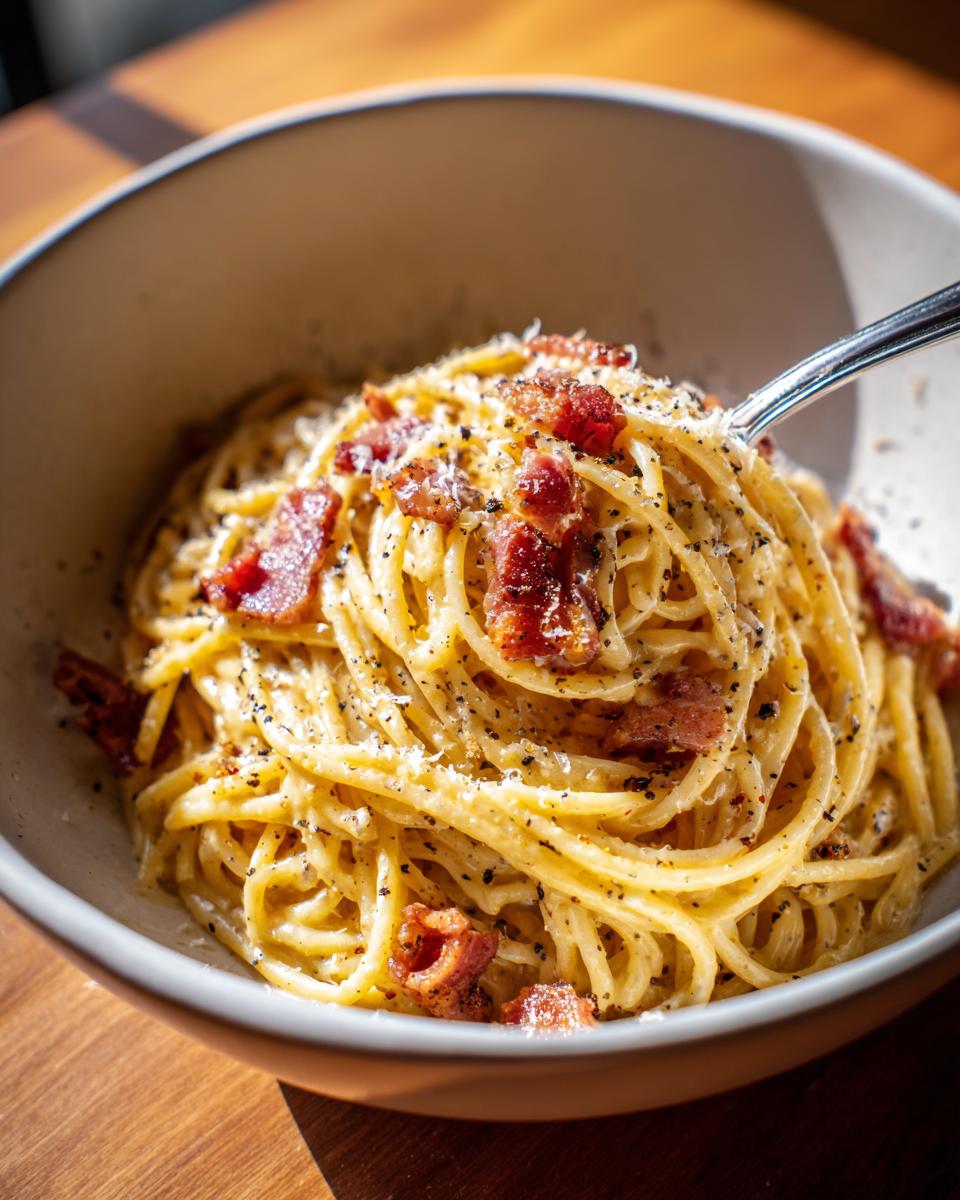
Pasta Carbonara is truly a dish best enjoyed the moment it’s made. That gorgeous, creamy sauce is at its absolute peak right out of the pan. So, get those plates ready and serve it up immediately! If, by some miracle, you have leftovers (which I doubt will happen!), it’s tricky. The sauce can separate or get gummy. Best bet is to store it in an airtight container in the fridge for a day, but honestly, it’s not the same. Reheating is also a gamble; gentle reheating with a tiny splash of water might work, but it’s really a fresh-made kind of dish. Trust me, make enough for one glorious meal!
Frequently Asked Questions About Pasta Carbonara
Got questions about making the perfect Pasta Carbonara? You’re not alone! It’s a simple dish, but those little details can make all the difference. Let’s clear up some common ones!
Can I use bacon instead of guanciale?
Look, guanciale is traditional and gives you that signature Roman flavor because it’s cured pork jowl and not smoked. If you absolutely cannot find guanciale, good quality pancetta is your next best bet! Bacon is smoked, which really changes the taste of the Carbonara, so I’d avoid it if you’re going for authenticity. But hey, if it’s all you have, use it and just know it’ll be a little different!
How do I prevent the eggs from scrambling?
This is the big one, right? The secret is all about temperature! You need to take the pan completely OFF the heat before you add the egg and cheese mixture to the pasta. The residual heat from the cooked pasta and the pan is enough to gently cook the eggs into a creamy sauce without scrambling them. Don’t be shy about letting the pan cool for 30 seconds or so after draining the pasta. Then, toss like mad!
Is Pasta Carbonara vegetarian?
No, traditional Pasta Carbonara is definitely NOT vegetarian. The key savory notes come from cured pork – either guanciale (pork jowl) or pancetta (pork belly). Eggs are eggs, cheese is cheese, but that meat is pretty essential to the classic flavor profile. If you’re looking for a vegetarian pasta dish, there are tons of amazing options out there, but Carbonara isn’t one of them, sadly!
My sauce is too thick or too thin. What did I do wrong?
It’s usually just a matter of adjusting the pasta water! If your sauce is too thick, you can loosen it up by adding a tiny bit more of that reserved starchy pasta water, a tablespoon at a time, while tossing. If it’s too thin, don’t panic! Keep tossing the pasta and sauce off the heat; the starch from the pasta water might help it thicken up a bit more as it cools and emulsifies with the cheese. You can also sometimes stir in a tiny bit more grated Pecorino Romano to help thicken it.
Nutritional Information for Pasta Carbonara
Just a heads-up, the nutrition info for Pasta Carbonara can really change depending on exactly what you use and how much you eat. This is a pretty good estimate for one generous serving, based on our recipe. It’s rich, hearty, and definitely a treat!
- Serving Size: 1 serving
- Calories: Around 650
- Fat: About 35g (with 15g saturated)
- Carbohydrates: Roughly 55g
- Protein: Around 28g
Classic Pasta Carbonara
- Total Time: 25 min
- Yield: 4 servings 1x
- Diet: Vegetarian
Description
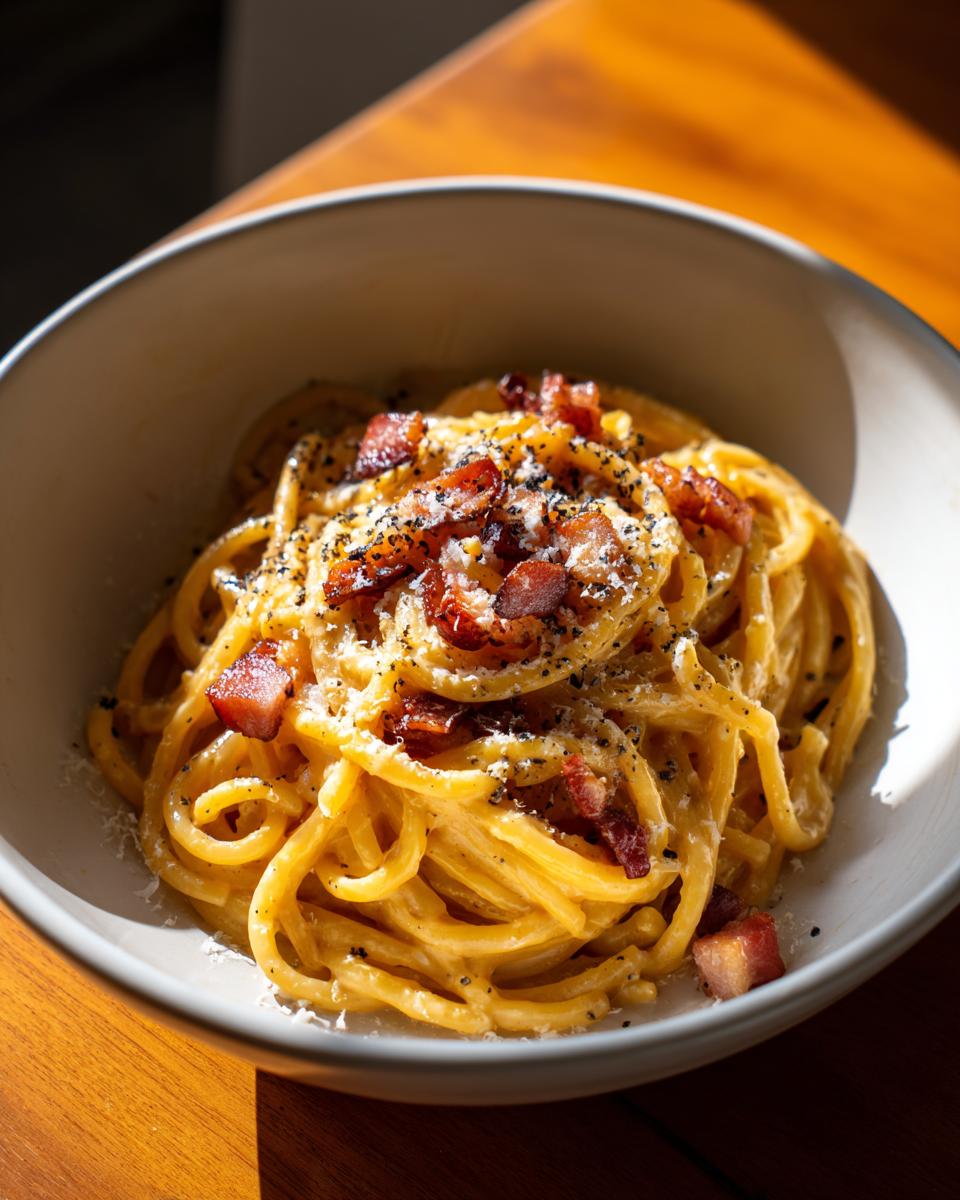
A traditional Roman pasta dish made with eggs, hard cheese, cured pork, and black pepper.
Ingredients
- 1 pound spaghetti
- 4 ounces guanciale or pancetta, diced
- 2 large eggs
- 1 cup grated Pecorino Romano cheese
- 1/2 teaspoon freshly ground black pepper
- Salt to taste
Instructions
- Cook spaghetti in a large pot of salted boiling water until al dente. Reserve about 1 cup of pasta water.
- While pasta cooks, cook guanciale or pancetta in a large skillet over medium heat until crisp. Remove meat with a slotted spoon, leaving rendered fat in the skillet.
- In a bowl, whisk together eggs, Pecorino Romano, and black pepper.
- Drain spaghetti and add it to the skillet with the rendered fat. Toss to coat.
- Remove skillet from heat. Gradually add the egg and cheese mixture to the pasta, tossing quickly to coat. The heat from the pasta will cook the eggs.
- Add reserved pasta water a tablespoon at a time, if needed, to create a creamy sauce.
- Add the cooked guanciale or pancetta back to the skillet and toss to combine.
- Serve immediately, with extra Pecorino Romano and black pepper if desired.
Notes
- Use good quality ingredients for the best flavor.
- Do not overcook the eggs; the residual heat from the pasta is sufficient.
- Adjust the amount of pasta water to achieve your desired sauce consistency.
- Prep Time: 10 min
- Cook Time: 15 min
- Category: Dinner
- Method: Stovetop
- Cuisine: Italian
Nutrition
- Serving Size: 1 serving
- Calories: 650
- Sugar: 3g
- Sodium: 700mg
- Fat: 35g
- Saturated Fat: 15g
- Unsaturated Fat: 20g
- Trans Fat: 0g
- Carbohydrates: 55g
- Fiber: 3g
- Protein: 28g
- Cholesterol: 200mg
Keywords: pasta carbonara, spaghetti carbonara, italian pasta, egg pasta, guanciale, pecorino romano