
Honestly, nothing screams ‘home’ and ‘celebration’ louder to me than the aroma of sage and perfectly seasoned sausage filling the kitchen. Forget those dry, crumbly stuffing disasters you sometimes see! For years—and I mean *years*—I’ve been tweaking this recipe until I landed on the absolute gold standard: my Classic Sage And Sausage Stuffing. It’s savory, it’s robust, and the texture is just spot-on every single time.
This isn’t some fancy, overly complicated dressing. It’s the real deal—the comforting, traditional side dish everyone fights over at the holiday table. When you master this simple approach, you’ll never look back. Trust me, this is the definitive Classic Sage And Sausage Stuffing you need in your repertoire!
Gathering Ingredients for Classic Sage And Sausage Stuffing
Getting ready to cook is half the fun, right? For this Classic Sage And Sausage Stuffing, you need wholesome things that smell amazing when they hit the heat. Don’t stress about finding anything weird; it’s all kitchen staples! We start with a full pound of that fantastic bulk pork sausage.
You’ll want one large onion and four celery stalks, both chopped up nicely. The real flavor heroes are dried sage—a full tablespoon—and a teaspoon each of thyme, salt, and pepper. And of course, you need 8 cups of dried bread cubes. Before you measure those out, make sure you check out how I make my sausage gravy for an idea of what other savory meals we love around here!
Finally, grab 1 1/2 cups of chicken broth for moisture and two large eggs, lightly beaten, to bind everything together beautifully.
Expert Tips for Perfect Classic Sage And Sausage Stuffing Texture
When it comes to stuffing, the texture is everything. You want it to soak up all those glorious sausage juices, but you absolutely do *not* want it to turn into a dense, heavy puddle. That often happens when people rush the bread prep, and that’s the first thing we fix here.
My biggest secret, straight from Grandma’s cookbook, is using bread that’s just begging for moisture. If you use soft, fresh-from-the-bag bread, you are asking for trouble. It dissolves! You need that structure.
Choosing the Right Bread for Classic Sage And Sausage Stuffing
You must use day-old bread, seriously. It has dried out just enough on its own to hold its shape when we add the broth and eggs. I usually leave slices out overnight on a baking sheet—covered with a clean kitchen towel, of course, so nothing flies in!
What kind of bread? Honestly, almost anything works, which is why this is such a forgiving recipe for your Classic Sage And Sausage Stuffing. A sturdy white sandwich loaf is traditional, but I love sourdough because it adds a little tang. Cubes of challah or brioche work too, but just watch the overall richness if you use those!
Now, here’s my little extra step that makes this the best Classic Sage And Sausage Stuffing you’ll ever taste: before you even mix anything, toss your bread cubes onto that same baking sheet and toast them lightly in an oven at 300 degrees for about ten minutes. You just want them lightly golden and crisp on the edges. This pre-toasting step gives the final product a fantastic chewiness underneath, preventing it from ever getting mushy, no matter how much broth you pour in!
Step-by-Step Instructions for Classic Sage And Sausage Stuffing
Alright, let’s get cooking! We need to build that amazing flavor base first. Grab a big skillet—the bigger the better so things don’t steam too much. We’re going to start with the sausage and make sure we get rid of that excess fat because we want flavor, not grease, soaking our bread cubes! If you need some inspiration on maximizing savory flavor, check out my biscuits and gravy recipe right here.
The key here is to cook low and slow just until the onions are translucent. Don’t rush this part, but the vegetables only need about five to seven minutes to hit that sweet spot of tender.
Sautéing Aromatics and Seasoning the Classic Sage And Sausage Stuffing Base
First, cook the full pound of bulk pork sausage over medium heat until it’s beautifully browned. Now, pay attention: drain off every bit of excess fat you can. Once drained, toss in your chopped onion and celery. We cook those until they start to soften up, which should take about 5 to 7 minutes.
Once that’s done, it’s time for the magic! Stir in that dried sage, thyme, salt, and pepper. You only want to cook this for about one minute right there in the skillet. That quick toast wakes up the dried herbs—wow, the smell is incredible! After that minute, scoop all this seasoned sausage mixture out of the skillet and plop it right into your big bowl with those toasted bread cubes. This technique ensures your Classic Sage And Sausage Stuffing is flavorful through and through.

Combining Wet and Dry Elements for Classic Sage And Sausage Stuffing
Now that your warm, savory mix is hanging out with the bread, it’s time to reintroduce the liquids. Pour the chicken broth evenly over the bread mixture. You need to toss this very gently. We’re moistening the bread, not drowning it!
Last, but certainly not least, stir in those two lightly beaten eggs. The eggs are the glue that holds our wonderfully textured Classic Sage And Sausage Stuffing together during baking. Be warned: If you start stirring too vigorously here, you’ll break up your perfectly toasted bread cubes, and we end up with something too mushy. Just a few gentle folds until you see streaks of yellow disappear, and you are golden!
Baking Options for Your Classic Sage And Sausage Stuffing
Okay, now we have the perfect mixture—it smells amazing already! You have two main ways to bake this Classic Sage And Sausage Stuffing, depending on what you’re serving it alongside. Both methods work great if you followed my bread toasting trick!
If you’re stuffing a bird, make sure you only pack the mixture in loosely. This is a big food safety point along with a practical one! If you pack it too tightly, the center won’t heat up safely to the required 165 degrees Fahrenheit, and you risk a soggy, undercooked clump. We want that beautiful heat penetration.
For me, I almost always prefer baking it separately in a dish. Why? Because it gives you that irresistible golden, crispy crust all over the top! Seriously, that crust is the best part. Grease up a nice baking dish—a 9×13 works perfectly for this batch size—and spread the mixture evenly across it.
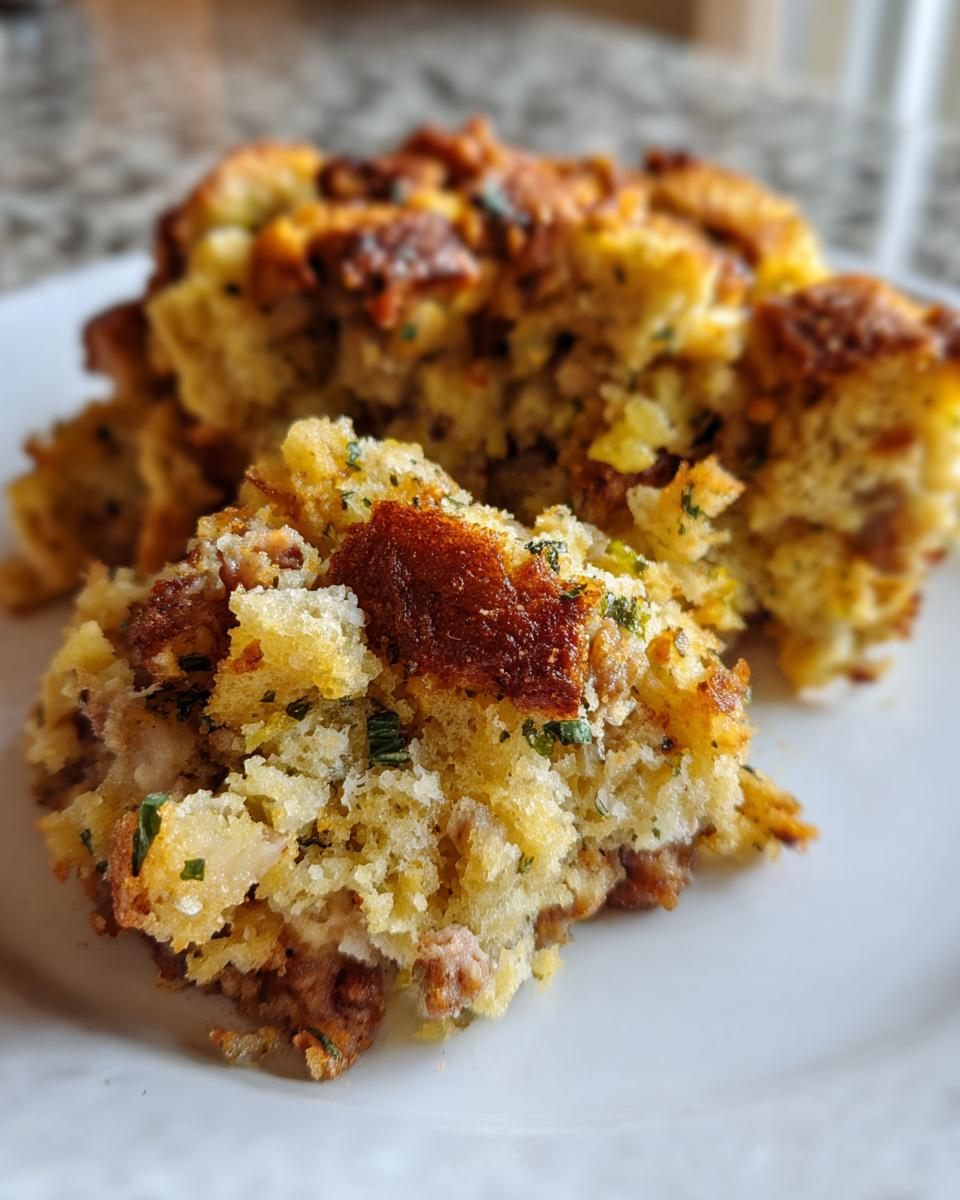
Whichever way you go, the temperature is the same: set your oven to 350 degrees Fahrenheit. Cover your dish with foil if you’re worried about the top browning too fast, especially if you’re baking it on its own. You’re looking for about 30 to 40 minutes total. When it’s done, the top should be a deep, gorgeous golden brown, and if you test the center, it should feel piping hot all the way through.
Ingredient Substitutions for Classic Sage And Sausage Stuffing
Look, sometimes you’re making dinner and you realize you’re out of the exact ingredient listed. Happens to me all the time! The beauty of this Classic Sage And Sausage Stuffing is that it’s versatile, which is why I think it’s such a reliable recipe to keep on hand. You don’t have to run to the store if you’re missing one little thing.
The main swap people ask about is the sausage. If you don’t eat pork, you can absolutely substitute the bulk pork sausage with mild or hot Italian sausage. That just changes the seasoning profile a tiny bit, usually adding more fennel or red pepper flakes, which is delicious! If you need to go completely meatless, crumbled vegetarian sausage works shockingly well.
For the binder, we used standard chicken broth, but if you’re making this for friends who are vegetarian or just skipping poultry this year, vegetable broth is a perfectly acceptable 1:1 swap. It keeps the stuffing moist without changing the sage and onion flavor profile too much. You might need to boost the salt slightly if your vegetable broth is low sodium, so taste as you go!
Another texture swap people try is using cornbread cubes instead of plain bread for this Classic Sage And Sausage Stuffing, which turns it into more of a dressing. If you do that, cut back slightly on the liquid because cornbread tends to soak things up faster than standard white bread cubes. This recipe is sturdy enough to handle those changes! Honestly, mastering substitutions is just part of the fun when you’re making a great Classic Sage And Sausage Stuffing.
Making Ahead and Storing Your Classic Sage And Sausage Stuffing
Do you know what the best thing about making this Classic Sage And Sausage Stuffing is? You can make the whole thing ahead of time! Seriously, holiday cooking is stressful enough without trying to juggle mixing bread cubes and browning sausage on the actual day. This recipe is built for advance prep.
Once you’ve completely mixed everything—the sausage mixture, veggies, spices, bread, broth, and eggs—you treat it like a casserole. Place the mixture loosely into your greased baking dish (or loosely inside the bird, if you insist!). Cover it tightly with plastic wrap and stick it into the refrigerator. It holds perfectly for up to two days chilling like that. When you’re ready to bake the next day, just pull it out about 30 minutes before it’s due in the oven so it loses that deep chill, but honestly, it bakes up beautifully straight from the fridge too.
If you’re looking way ahead, freezing leftovers is simple too. Once baked, let the remaining Classic Sage And Sausage Stuffing cool completely. Transfer it to an airtight, freezer-safe container. It stays good for about two months. When thaw time comes, I find the best way to reheat is covered in the oven at 350 degrees until hot, maybe adding a tiny splash of extra broth halfway through if it looks a little dry.
Reheating single portions is super easy, too! Just microwave a scoop with a teaspoon of water or broth sprinkled over the top. That little bit of extra humidity stops the bread from turning rock-hard during reheating. It tastes almost as good as fresh!
Frequently Asked Questions About Sausage Stuffing
I get so many questions about making this dish—it’s the one side everyone always wants the recipe for! Whether you call it stuffing or dressing, I want to make sure yours comes out perfect. Here are the things you all ask me about most often when you’re whipping up this savory sausage side.
Is it safe to stuff poultry with this Classic Sage And Sausage Stuffing?
This is the MOST important question! If you are going to put this sausage stuffing inside your bird, you absolutely have to make sure the turkey or chicken reaches an internal temperature of 165 degrees Fahrenheit in the deepest part of the stuffing. I always use a reliable meat thermometer for this; you can’t guess on this stuff.
If you’re nervous about that internal temperature check, just bake your stuffing separately in a casserole dish! It’s much safer, and honestly, you get that gorgeous crust all over, which is what I prefer most of the time. If you’re thinking about other holiday sides, you absolutely have to check out this amazing cornbread dressing recipe too!
How can I make this sausage stuffing moister?
I mentioned this briefly before, but if your final product seems a bit dry, it almost always comes down to needing just a tiny bit more liquid. Remember that note I included about adding a little extra broth? That’s your fix!
Don’t just dump it all in at once, though. Wait until you’ve gently mixed in the bread cubes and the eggs. If it still looks like it hasn’t fully soaked up the moisture, drizzle in just a tablespoon or two of extra chicken broth at a time, stirring super gently after each addition. You want it moist enough that when you squeeze a bit in your hand, it holds its shape, but not so wet that liquid drips out easily. That extra liquid ensures your sausage stuffing stays tender!
Serving Suggestions for Classic Sage And Sausage Stuffing
Making incredible Classic Sage And Sausage Stuffing isn’t just about the recipe itself; it’s about what you serve alongside it! This dish is the backbone of any major comfort meal. When that pan comes out of the oven, golden brown and fragrant, you know the best part of the meal has arrived. Obviously, this stuffing sings beside turkey, especially on Thanksgiving or Christmas. Seriously, if you have turkey, you need this stuffing.
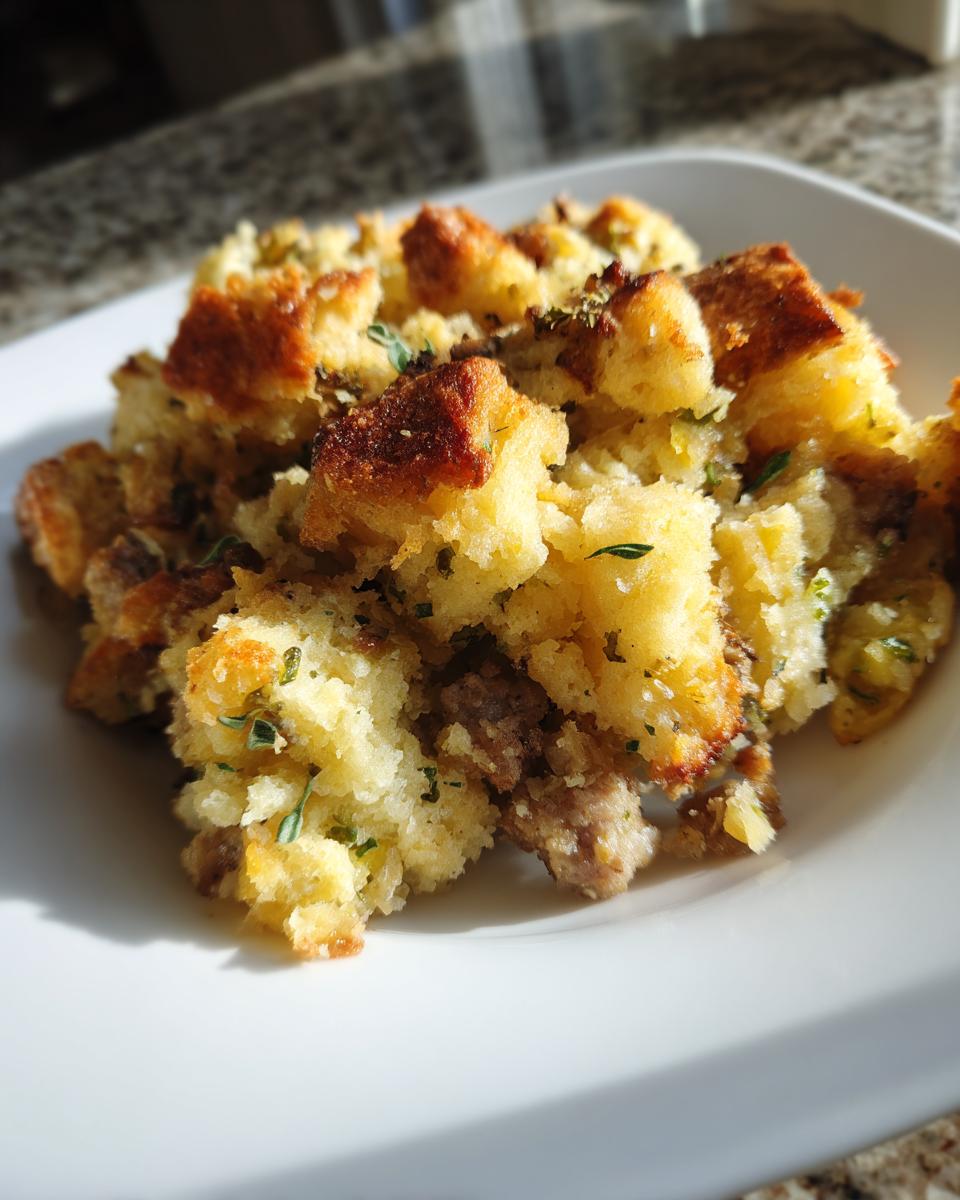
But don’t think it stops there! This savory, herby stuffing is fantastic with a simple roast chicken. The sausage fat oozes into the bird as it cooks, and the sage complements the chicken skin so perfectly. It’s a weeknight hero too, even if you aren’t cooking a massive bird!
Now, what good is stuffing without the proper accompaniment? Gravy! If you want that absolute peak ultimate comfort meal experience, you need gravy that’s smooth, rich, and deeply flavorful. I have an amazing recipe for creamy mashed potatoes served with gravy that you simply have to try pairing with this Classic Sage And Sausage Stuffing. You can find my favorite recipe for creamy mashed potatoes and gravy, and honestly, spooning that rich gravy right over a hearty scoop of this stuffing is pure happiness.
Another underrated pairing is pork loin or ham. The way the savory sage cuts through the slight sweetness of baked ham is just magnificent. Honestly, if you can serve it piled high next to something savory, drizzled with more sauce, this Classic Sage And Sausage Stuffing will steal the show!
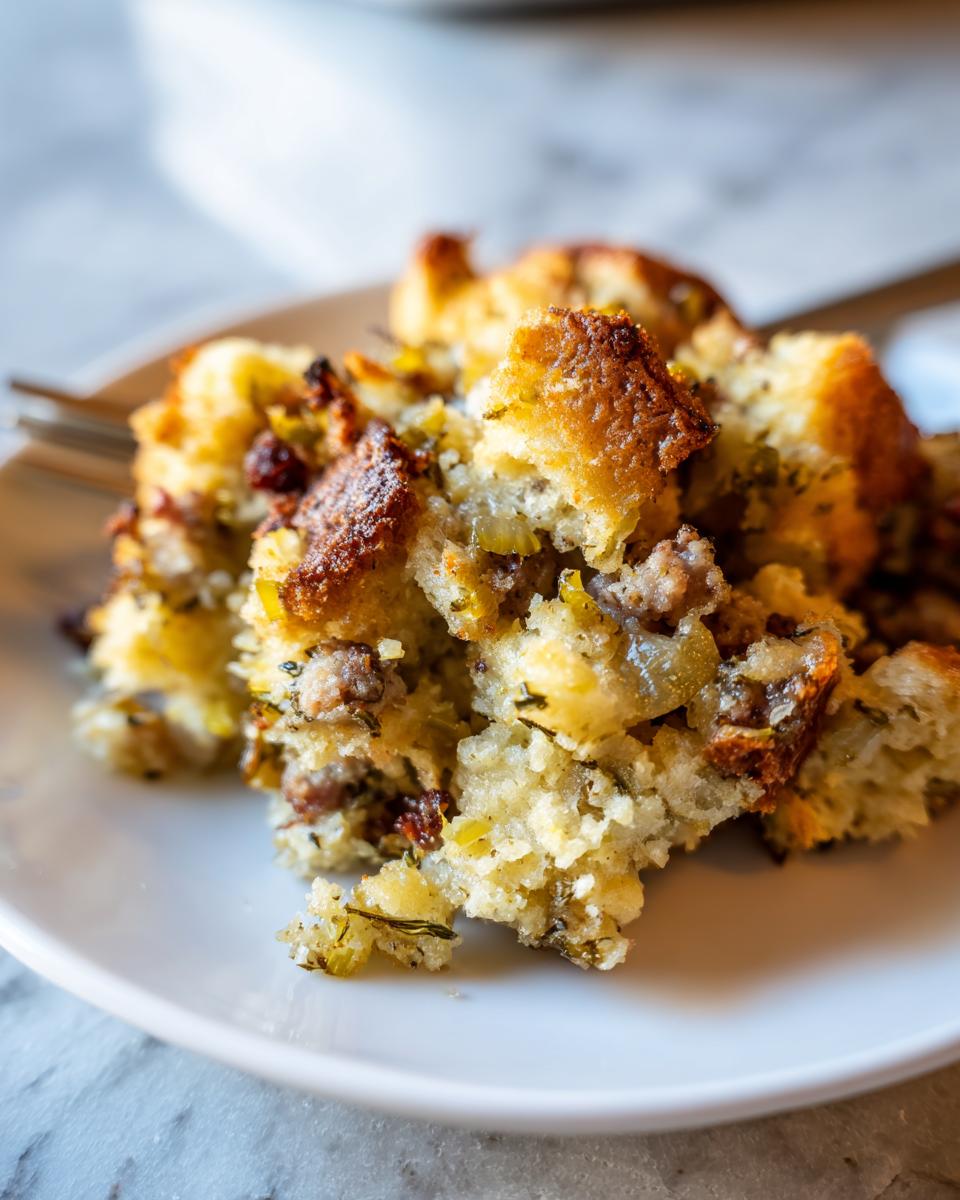
Estimated Nutritional Snapshot for Classic Sage And Sausage Stuffing
Because we’re dealing with savory sausage and plenty of bread, this stuffing is definitely hearty! People always want to know what they are eating, especially when we’re treating ourselves during the holidays. Here’s a quick look at the numbers for one serving of this Classic Sage And Sausage Stuffing.
Keep in mind that these are just estimates, right? Because I use different types of sausage or if you use less broth, the numbers can shift slightly. But this gives you a great baseline for what you’re enjoying spoonful after spoonful!
- Calories: 320
- Total Fat: 18g (Be sure to drain that sausage well!)
- Sodium: 550mg (This depends heavily on your broth and sausage choice!)
- Carbohydrates: 25g
- Protein: 15g
You can see we have a good balance of macro-nutrients here—protein from the sausage, carbs from the bread, and healthy fats. If you are watching sodium or saturated fat, remember that using leaner sausage or limiting the salt you add during cooking can make a big difference in your final batch of Classic Sage And Sausage Stuffing.
Print
Classic Sage and Sausage Stuffing
- Total Time: 60 min
- Yield: 8 servings 1x
- Diet: Vegetarian
Description
A traditional stuffing recipe featuring savory sausage and aromatic sage.
Ingredients
- 1 pound bulk pork sausage
- 1 large onion, chopped
- 4 celery stalks, chopped
- 1 tablespoon dried sage
- 1 teaspoon dried thyme
- 1 teaspoon salt
- 1/2 teaspoon black pepper
- 8 cups dried bread cubes (about 1 loaf)
- 1 1/2 cups chicken broth
- 2 large eggs, lightly beaten
Instructions
- Cook sausage in a large skillet over medium heat until browned. Drain off excess fat.
- Add onion and celery to the skillet. Cook until softened, about 5 to 7 minutes.
- Stir in sage, thyme, salt, and pepper. Cook for 1 minute until fragrant.
- Transfer the sausage and vegetable mixture to a large bowl.
- Add the dried bread cubes to the bowl and toss to combine.
- Pour the chicken broth over the bread mixture and toss gently until the bread is evenly moistened.
- Stir in the beaten eggs.
- If stuffing poultry, place the mixture loosely into the cavity. If baking separately, transfer to a greased baking dish.
- Bake at 350 degrees Fahrenheit for 30 to 40 minutes, or until the top is golden brown and the center is heated through.
Notes
- Use day-old bread for the best texture in your stuffing.
- If you prefer a moister stuffing, add a little more broth.
- Prep Time: 20 min
- Cook Time: 40 min
- Category: Side Dish
- Method: Baking
- Cuisine: American
Nutrition
- Serving Size: 1 cup
- Calories: 320
- Sugar: 2
- Sodium: 550
- Fat: 18
- Saturated Fat: 6
- Unsaturated Fat: 12
- Trans Fat: 0
- Carbohydrates: 25
- Fiber: 2
- Protein: 15
- Cholesterol: 60
Keywords: stuffing, dressing, sausage, sage, holiday side, bread stuffing