
Oh my goodness, is there anything more comforting than a big, steamy bowl of curry after a long day? Honestly, for me, Japanese curry is right at the top of the list! When I first started dabbling in making it from scratch, it felt a little intimidating, trying to build that perfect dark, rich sauce. But trust me, I’ve cracked the code for the absolute best simple Japanese curry recipes that feel totally authentic.
The secret weapon, and the reason this is perfect for a Tuesday night, is using those convenient store-bought roux blocks. They give you that deep, familiar flavor without spending half an hour stirring butter and flour! This recipe is straightforward, uses ingredients you can grab easily, and delivers that satisfying, thick sauce we all know and love. I’ve mastered this dish over years of chaotic weeknights, and now I never have to order takeout when I need serious comfort food.

Why This Simple Japanese Curry Recipes is a Weeknight Hero
Listen, when it comes to dinner after work, I need things fast, but I refuse to sacrifice flavor. That’s why this version of Japanese curry recipes has become my go-to!
- It’s lightning quick—prep takes barely 15 minutes!
- The results taste like they cooked all day long.
- It’s the definition of Japanese comfort food.
Quick Preparation Time for Japanese Curry Recipes
Seriously, 15 minutes of prep? Yes! You just need to chop the onions, carrots, and potatoes into reasonably sized chunks. Since we are browning the meat first and cooking everything in one pot, cleanup is also a dream. These Japanese curry recipes are built for speed.
The Magic of Japanese Curry Roux Blocks
If you tried to make the sauce completely from scratch, you’d be whisking butter and flour (a roux) and building layers of spice flavor for hours. No thanks! Those pre-packaged roux blocks are your best friend here. You just snap off the squares, let them dissolve in the savory broth after simmering the meat and veg, and boom—instant, perfectly textured Japanese curry sauce!
Essential Ingredients for Authentic Japanese Curry Recipes
Getting the ingredients right is key to making these Japanese curry recipes taste like they came straight from a Tokyo kitchen. The beauty here is that you don’t need 20 different spices. It’s all about nailing the main players!
Meat and Vegetable Components for Japanese Curry Recipes
For this beef version, I insist on beef chuck. You want something that can stand up to simmering without falling apart too quickly. Make sure you cube it nice and uniformly—about 1-inch pieces works best. Don’t worry too much about being perfectly exact, but consistent size means they cook evenly!
For the vegetables, keep things classic! You need two carrots and two medium potatoes. The most important thing? Cut them into chunks that are suitable for simmering. If they are too small, they’ll turn to mush before the beef is tender. I like mine big enough so you get a nice bite of sweet carrot and soft potato in every spoonful of your Japanese curry recipes.
Flavor Builders and Roux for Japanese Curry Recipes
Now we get to the convenience factor! You’ll need one full package of those standard Japanese curry roux blocks—usually weighing around 8 ounces unless you buy a specialty brand. Just grab the mild or medium heat version; that’s what keeps this firmly in the comfort food category.
To balance out the rich roux flavor, you need just two small additions. First, one tablespoon of standard soy sauce for depth. Second, a single teaspoon of sugar. That tiny bit of sugar cuts through the savory notes and is essential for authentic flavor in these Japanese curry recipes. Oh, and of course, four cups of water, unless you’re feeling fancy and use broth!
Step-by-Step Instructions for Perfect Japanese Curry Recipes
Now, this is where the cooking magic happens! Honestly, following the order here is what makes these Japanese curry recipes so straightforward. You’re essentially building flavor in layers, which sounds fancy, but it’s super easy to follow on the stovetop.
Browning the Beef and Sautéing Aromatics
First things first, get your Dutch oven—or just a big, deep pot—hot over medium-high heat and pour in that tablespoon of oil. Toss those beef cubes in there. Here’s my expert tip: don’t overcrowd the pot! If you cram them all in, they’ll steam instead of brown. Work in batches if you have to. You want a deep, gorgeous color on all sides for maximum richness later on. Once browned, pull the beef out and set it aside for a minute.
Now, add your sliced onion to the drippings. You’re just going to cook those down until they’re soft and sweet, which usually takes about five minutes. They’ll soak up all that beefy flavor we just created. Once they smell sweet, send the brown beef right back into the pot with the onions!
Simmering Vegetables and Tenderizing Meat
Time to add the heavy lifters: your carrots and potatoes! Once they’re tucked in, pour in those four cups of water. Crank the heat up until it hits a full boil, then immediately knock it down, slap a lid on it, and let everything simmer gently. I let this go for a solid 20 minutes. That’s the time needed to get those root vegetables just tender enough.
While it’s simmering, you might notice some grayish foam bubbling up on top. Skim that off with a spoon! Trust me on this—it makes the final sauce so much cleaner and smoother. We’re aiming for delicious results in our Japanese curry recipes, and floating bits don’t help!
Thickening the Japanese Curry Recipes with Roux
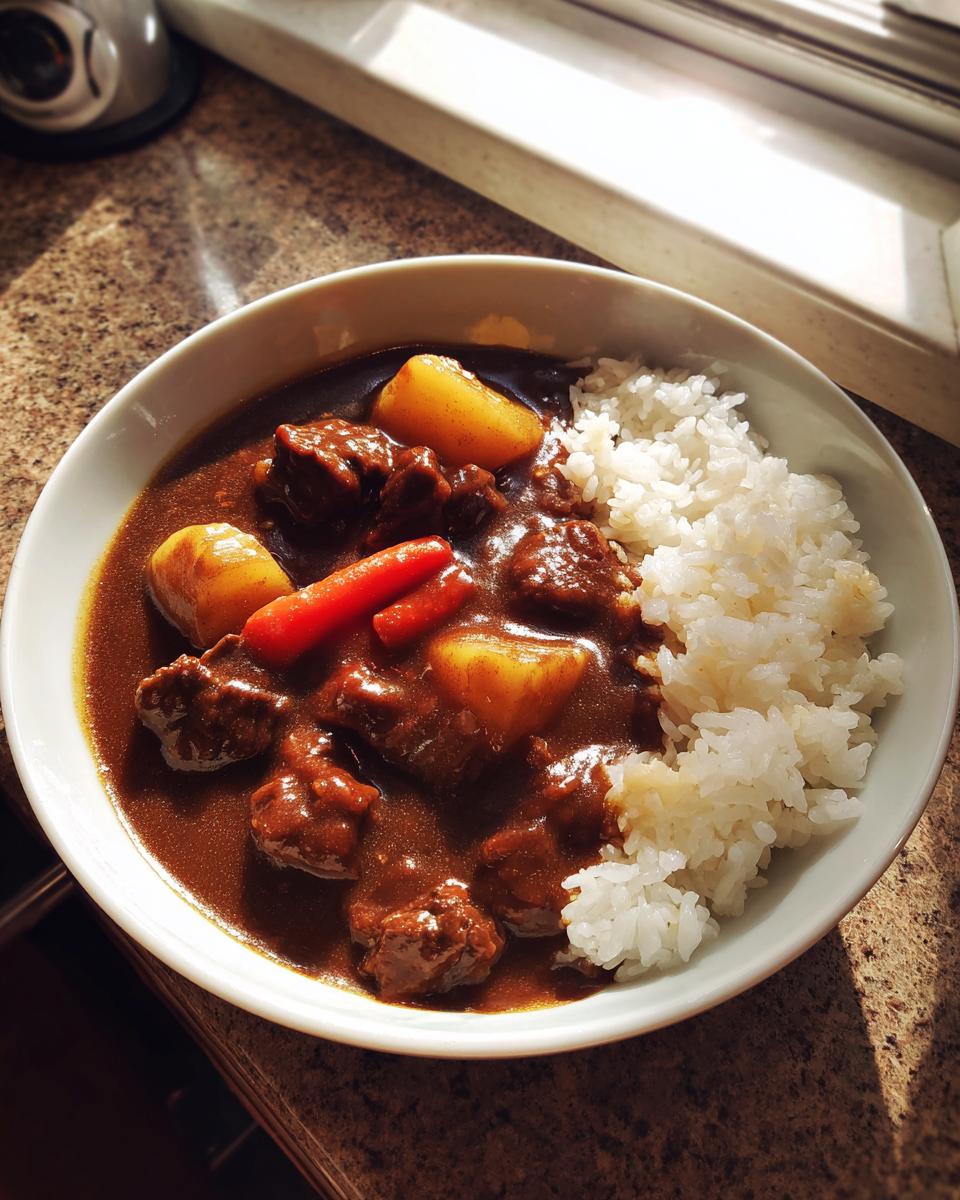
This next step is the most crucial part for texture. As soon as the veggies are tender, you MUST turn the heat completely OFF. Seriously, kill the burner! Now, take your curry roux blocks and break them into pieces, dropping them into the hot liquid. You have to stir constantly until those blocks melt completely into the broth. If you leave the heat on high, you’ll end up with a clumpy mess, not smooth Japanese curry recipes style sauce.
Once it’s all smooth, throw in that soy sauce and sugar. Then, return the pot to very low heat. Let it simmer gently for just another 5 to 10 minutes, stirring often so nothing sticks to the bottom while it thickens up to that satisfying, gravy-like consistency. And remember this golden rule: Do not boil after adding the roux! Boiling breaks down the thickening agents.
Tips for Next-Level Japanese Curry Recipes
Okay, so you’ve got the basic, super easy version down—awesome! But if you make this consistently, you’re going to want to start tinkering, right? We all do! Even though this is one of my favorite Japanese curry recipes because it’s fast, it takes very little effort to elevate it to something truly special.
Ingredient Swaps for Japanese Curry Recipes
The beauty of this dish is how forgiving it is. If you’re tired of beef, swap it out! Chicken thighs are fantastic; they stay tender, or you can even use pork shoulder—chicken or pork work just as well as the chuck in these Japanese curry recipes. Just adjust your simmer time based on the meat.
When it comes to veggies, you can toss in practically anything near the end. I love shredding some mushrooms and letting them melt into the sauce. Or, if you want a pop of color and sweetness, toss in a cup of frozen peas about five minutes before you serve it. They cook instantly and look great floating in that thick sauce!
Building a Deeper Flavor Base
Remember I mentioned using beef broth instead of water? That’s the first big win! If you use broth, you instantly get a richer backdrop for the roux to build on. It just tastes more complex, even though you did zero extra work.
But here is my absolute favorite trick for next-level depth, especially if you’re using store-bought mild blocks: grated apple. I always grate about half a small apple right into the pot when I add the onions and return the meat. It dissolves completely, and it adds this incredible, subtle sweetness that perfectly balances the savory spices. You won’t taste “apple,” you’ll just taste “amazing curry.” Try it on your next batch of Japanese curry recipes—you won’t go back!
Serving Suggestions for Japanese Curry Recipes
So you’ve got this gorgeous, thick, fragrant Japanese curry simmering on the stove—now what are you going to serve it with? This isn’t a dish that stands alone, trust me! The sauce is so rich and flavorful that it absolutely needs a sturdy, slightly sticky base to soak everything up.
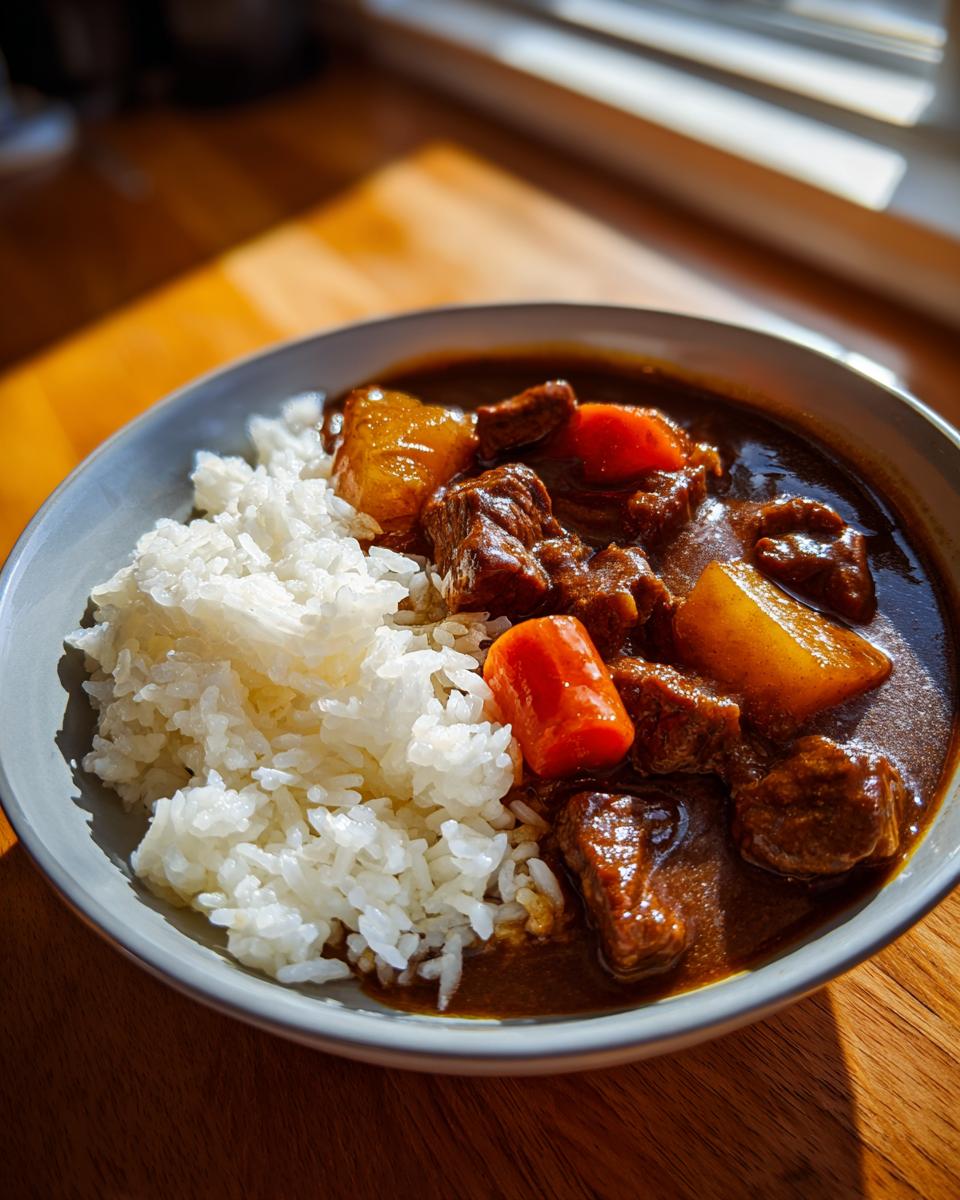
Of course, the number one classic partner for any of these Japanese curry recipes is good old-fashioned steamed white rice. I prefer medium-grain or short-grain rice because it has that perfect stickiness. It cups the curry sauce beautifully; you can scoop up a perfect bite with rice, beef, and tender potato all together. Don’t use fluffy long-grain rice—it’s just too dry for this job!
But don’t stop at plain rice! If you’re making a big batch, try serving half with plain rice and the other half over something fun. You can pour it right over crisp, shredded cabbage for texture, or even put it on top of udon noodles if you’re feeling adventurous. Another winner that my family loves is serving it alongside crunchy, deep-fried tonkatsu (pork cutlet). That combination of the crispy meat dipped in the savory, thick curry sauce? Pure heaven. When you’re trying out these Japanese curry recipes, presentation counts!

Storage and Reheating Japanese Curry Recipes
Listen, the best part about making a big batch of this beef curry? You get leftovers! And honestly, I think these Japanese curry recipes taste even better the next day. All those spices and the beef juices have extra time to marry together overnight in the fridge. It’s a miracle of leftovers!
Once the curry has cooled down completely—don’t put hot food straight into the fridge, you know how that works—transfer it to an airtight container. You can easily keep it good for three, maybe even four days in the refrigerator. I usually make a double batch just so I don’t have to cook mid-week!
The Best Way to Reheat Your Japanese Curry Recipes
You have two main options for reheating, but I always go for the stovetop method if I have the time. Why? Because it helps bring back that perfect, thick consistency that we worked so hard to achieve when we dissolved the roux blocks! Just scoop the curry into a saucepan over medium-low heat. Stir it gently and frequently. You want it warmed through evenly without scorching the bottom, which is super easy to do with a thick sauce like this.
Now, if you’re in a huge rush, the microwave works fine, too. Pop a serving in a microwave-safe bowl, cover it loosely so it doesn’t splatter everywhere, and heat it up in short, 60-second bursts, stirring well in between each burst until it’s piping hot. If it seems a little too thick after reheating, you can stir in a splash of water or even just a tiny spoonful of broth until it’s back to your preferred texture for these Japanese curry recipes.
Frequently Asked Questions About Japanese Curry Recipes
I know even the simplest recipes sometimes leave you with small questions running through your head. That’s totally normal! I’ve answered the top things people always ask me when they try making these Japanese curry recipes for the first time.
Can I make this Japanese Curry Recipes vegetarian?
Absolutely, you can turn this into a fantastic vegetarian dish! If you skip the beef, you need something hearty to simmer in the broth. Cubed firm tofu is a great replacement; just don’t brown it, add it in with the vegetables. Lots of people also just load it up with extra robust vegetables like sweet potatoes, mushrooms, and bell peppers. My main word of caution is checking your roux block! Not all of them are vegetable-based; some sneaky brands use beef or chicken fats for depth, so always double-check the ingredient label if you want to keep it 100% meat-free.
How spicy are standard Japanese Curry Recipes?
This is a great question because the spice level really changes the whole vibe! Generally speaking, the very standard, beige-boxed Japanese curry roux you find in the aisle defaults to mild or medium heat. They are usually designed to be universally palatable, so they aren’t scorching hot like some other Asian curries. If you like a good kick, go for the “Hot” version of the block, or better yet, control it yourself!
I always keep a jar of cayenne pepper or some red chili flakes next to my spice rack. If I’m making these Japanese curry recipes for the whole family, I make the base mild and then stir a pinch of cayenne into just my portion right before serving. That lets everyone customize their bowl of deliciousness!
Estimated Nutritional Snapshot for Japanese Curry Recipes
I always feel a little strange sharing the numbers because, let’s be real, when you’re reaching for a bowl of homemade beef curry, you aren’t thinking about macros! You’re thinking about comfort, right? But for those of you who like to keep an eye on things, I put together a rough estimate based on the core ingredients in this official recipe. Keep in mind this is based on using standard portions of beef chuck and the standard roux package.
This information is just a guideline, though, so don’t take it as gospel truth! If you swap beef for tofu or load up on extra potatoes, these numbers will definitely shift. Think of this as your general ballpark for this batch of Japanese curry recipes.
Here’s a quick look at the numbers per serving (which makes four generous servings from this recipe):
- Calories: Around 550 calories—not too heavy for a main meal!
- Fat: This one is higher, coming in around 28 grams total, which makes sense since we brown the beef and the roux contains fat.
- Protein: A solid 30 grams of protein per bowl, thanks to that beef chuck!
- Carbohydrates: We’re looking at about 45 grams of carbs. Most of this comes from the potatoes and, of course, the rice you serve it with!
- Sodium: This clocks in higher, around 850mg, mostly from the savory flavor boost of the soy sauce and ingredients in the roux.
Overall, it feels pretty balanced for a hearty, cold-weather meal. If you’re trying to cut back on sodium, you can always use a low-sodium soy sauce when making these Japanese curry recipes!
Share Your Simple Japanese Curry Recipes Experience
Now that I’ve walked you through all my favorite tips and tricks for making this quick and deeply satisfying beef curry, I can’t wait to hear how it turned out for you! Seriously, capturing that perfect, thick consistency is so rewarding when you nail it.
If you gave this recipe a try, please hop into the comments below and let me know! I’m always encouraging cooks to rate their successes—did it earn five stars in your kitchen? What did you serve it with? Did you stick to plain rice, or did you go wild with some yakisoba noodles?
Sharing your results helps everyone else feel confident trying out these Japanese curry recipes too! Don’t be shy; I love seeing how this recipe makes its way onto different dinner tables. Happy scooping!
Print
Simple Japanese Curry
- Total Time: 60 min
- Yield: 4 servings 1x
- Diet: Low Fat
Description
A straightforward recipe for classic Japanese curry.
Ingredients
- 1 tablespoon vegetable oil
- 1 pound beef chuck, cut into 1-inch cubes
- 1 large onion, sliced
- 2 carrots, peeled and cut into chunks
- 2 medium potatoes, peeled and cut into chunks
- 4 cups water
- 1 package Japanese curry roux blocks (about 8 oz)
- 1 tablespoon soy sauce
- 1 teaspoon sugar
- Cooked white rice, for serving
Instructions
- Heat the vegetable oil in a large pot or Dutch oven over medium-high heat.
- Brown the beef cubes on all sides. Remove the beef and set aside.
- Add the sliced onion to the pot and cook until soft, about 5 minutes.
- Return the beef to the pot. Add the carrots and potatoes.
- Pour in the water and bring the mixture to a boil. Reduce heat, cover, and simmer for 20 minutes, or until the vegetables are tender. Skim off any foam that rises to the surface.
- Turn off the heat. Break the curry roux blocks into pieces and add them to the pot. Stir until the roux is completely dissolved.
- Stir in the soy sauce and sugar.
- Return the pot to low heat and simmer gently for 5 to 10 minutes, stirring often, until the curry has thickened to your liking. Do not boil after adding the roux.
- Serve hot over cooked white rice.
Notes
- You can substitute chicken or pork for the beef.
- For a richer flavor, use beef broth instead of water.
- Prep Time: 15 min
- Cook Time: 45 min
- Category: Dinner
- Method: Stovetop
- Cuisine: Japanese
Nutrition
- Serving Size: 1 serving
- Calories: 550
- Sugar: 12
- Sodium: 850
- Fat: 28
- Saturated Fat: 10
- Unsaturated Fat: 18
- Trans Fat: 0
- Carbohydrates: 45
- Fiber: 5
- Protein: 30
- Cholesterol: 80
Keywords: Japanese curry, beef curry, easy curry, roux, comfort food