
You know those nights, right? You’re staring into the fridge, the takeout menus are calling your name, but honestly, you just want something fantastic that doesn’t involve waiting 45 minutes for a delivery driver?
Well, stop scrolling, because I have cracked the code on my Simple Mongolian Beef. This recipe is the game-changer I needed when I wanted that authentic, savory, slightly sweet takeout flavor, but cooked in my own kitchen in less time than the actual delivery takes!
I used to burn the edges of the beef every single time I tried a stir-fry. Total disaster! But I finally figured out the secret to perfectly searing that flank steak and thickening the sauce just right. Trust me, once you nail this technique, you’re going to toss out every takeout menu you own. This is the best beef stir fry you’ll make all year!

Why You Will Love This Simple Mongolian Beef Recipe
I know you have a million weeknight recipes on rotation, so I wouldn’t waste your time bragging unless this recipe truly earned its keep. This isn’t just another beef stir fry; it’s the one that surprised me the most with how good it was, and how fast it got on the table!
- It’s unbelievably fast! Seriously, you’re looking at about 15 minutes of prep and maybe 10 minutes in the pan. That means dinner is done in under half an hour sometimes, beating even the fastest delivery window.
- The sauce is everything. It hits that perfect sweet-and-savory note that makes authentic Mongolian Beef addictive. I used to think that rich coating required hours of simmering, but nope! It’s all about that cornstarch trick.
- Cleanup is a total breeze. Because it’s a proper stir-fry, almost everything happens in one skillet or wok. Less time scrubbing, and more time enjoying your amazing dinner.
Quick Prep and Cook Times for Easy Weeknights
If you are working late and desperate, this recipe saves the day. The total time listed is just 25 minutes, and honestly, if you’re speedy with your knife skills, you might even beat that. We’re talking about getting that restaurant-quality steak on your plate quicker than you can set up your profile on a delivery app. It’s designed for those evenings when you need something fantastic *right now*.
Authentic Flavor Profile in Your Home Kitchen
The soul of any great Mongolian Beef is that glossy, dark sauce that clings beautifully to every single slice of steak. We rely on a perfect blend of soy sauce, a little punch from the brown sugar, and that earthy warmth from the ginger. When you see that sauce bubble up and thicken around the beef, you’ll know you’ve achieved that signature flavor without visiting your local Asian restaurant.
If you want to see a few other really quick Asian-inspired meals that are game-changers for busy evenings, you should check out my chicken stir-fry with colorful veggies. It uses similar high-heat techniques!
Essential Ingredients for Perfect Mongolian Beef
When making any successful stir-fry, the magic isn’t just the cooking—it’s having everything prepped and ready to go. Seriously, once the heat is on, things move fast for this easy Asian recipe! We need to talk about the star, the flank steak, which needs to be sliced super thin against the grain. This is the crucial step; it ensures that the beef stays tender, not chewy, after searing.
For the sauce, you’ll bring together quarter cups of soy sauce and water, balanced with two tablespoons of brown sugar for that sweetness. Don’t forget your thickening agent, cornstarch, along with sesame oil and ground ginger for aroma. Then, for the aromatics, we use fresh garlic, minced finely, and a whole cup of green onions, making sure to keep the white parts separate from the leafy green tops.
Oh, and a quick peek at how I prep my steak when I’m making something like this, or if I’m making a nice grilled flank steak, you can see my tips for slicing meat correctly. It really matters when you are working with thin strips!
- 1 pound flank steak, thinly sliced against the grain
- 1/4 cup soy sauce
- 1/4 cup water
- 2 tablespoons brown sugar
- 1 tablespoon cornstarch
- 1 tablespoon sesame oil
- 1 teaspoon ground ginger
- 2 cloves garlic, minced
- 1 tablespoon vegetable oil (for cooking)
- 1 cup sliced green onions, white and green parts separated
Step-by-Step Instructions for Making Mongolian Beef
Okay, this is where the magic happens, and honestly, it all comes down to speed. Because we’re cooking this so quickly over high heat, you need to have your ingredients ready *before* you even turn on the burner. Once that pan gets hot, there’s no time to stop and measure anything!
We’re using the standard stir-fry method, which means we cook the meat, pull it out, cook the veggies/aromatics, thicken the sauce, and then toss everything back together. It keeps the steak from overcooking while the sauce does its job. This is how you get restaurant-quality results at home.
Preparing the Flavorful Mongolian Beef Sauce
First things first, let’s get that sauce ready! Grab a medium bowl. You are going to whisk together the soy sauce, water, brown sugar, sesame oil, and ground ginger. Now, the cornstarch is super important here. It’s our non-negotiable thickening agent. Make sure you whisk it really well so there are absolutely no dry pockets hiding in there. The cornstarch is what takes that watery liquid and turns it into that beautiful, sticky glaze that coats the beef perfectly.
Set that bowl aside. I mean it—don’t touch it again until the steak is browned and waiting to re-enter the pan later! If you want to see how I handle sauce mixing for my chicken stir-fry, the principle is exactly the same for getting a smooth base.
Searing the Steak for Best Mongolian Beef Texture
Now, heat a large skillet or wok over medium-high heat. Add your vegetable oil. We want this nice and hot—shimmering, but not smoking frantically. Next, add your thinly sliced flank steak. Here’s the big expert tip: Cook it in a single layer! If you dump it all in at once, the temperature drops, and you end up steaming the beef instead of searing it. Don’t crowd the pan!
Cook it for just a minute or two per side until it gets that lovely brown crust. We aren’t trying to cook it all the way through yet. Once it’s browned nicely, pull that steak out immediately and set it on a clean plate. It will finish cooking later, I promise!
Finishing the Mongolian Beef Stir-Fry
Back to the pan! Toss in your minced garlic and those reserved white parts of the green onions. Stir them constantly for about 30 seconds until you can really smell that wonderful garlic fragrance. Watch carefully so the garlic doesn’t burn, because burnt garlic tastes bitter!
Now, it’s time for the sauce. Pour that whisked mixture right into the skillet. Keep stirring constantly as it hits the heat. It’s going to go from thin liquid to simmering sauce in about a minute—that’s the cornstarch working its magic. Once it visibly thickens, immediately return all that beautiful browned steak back into the pan.
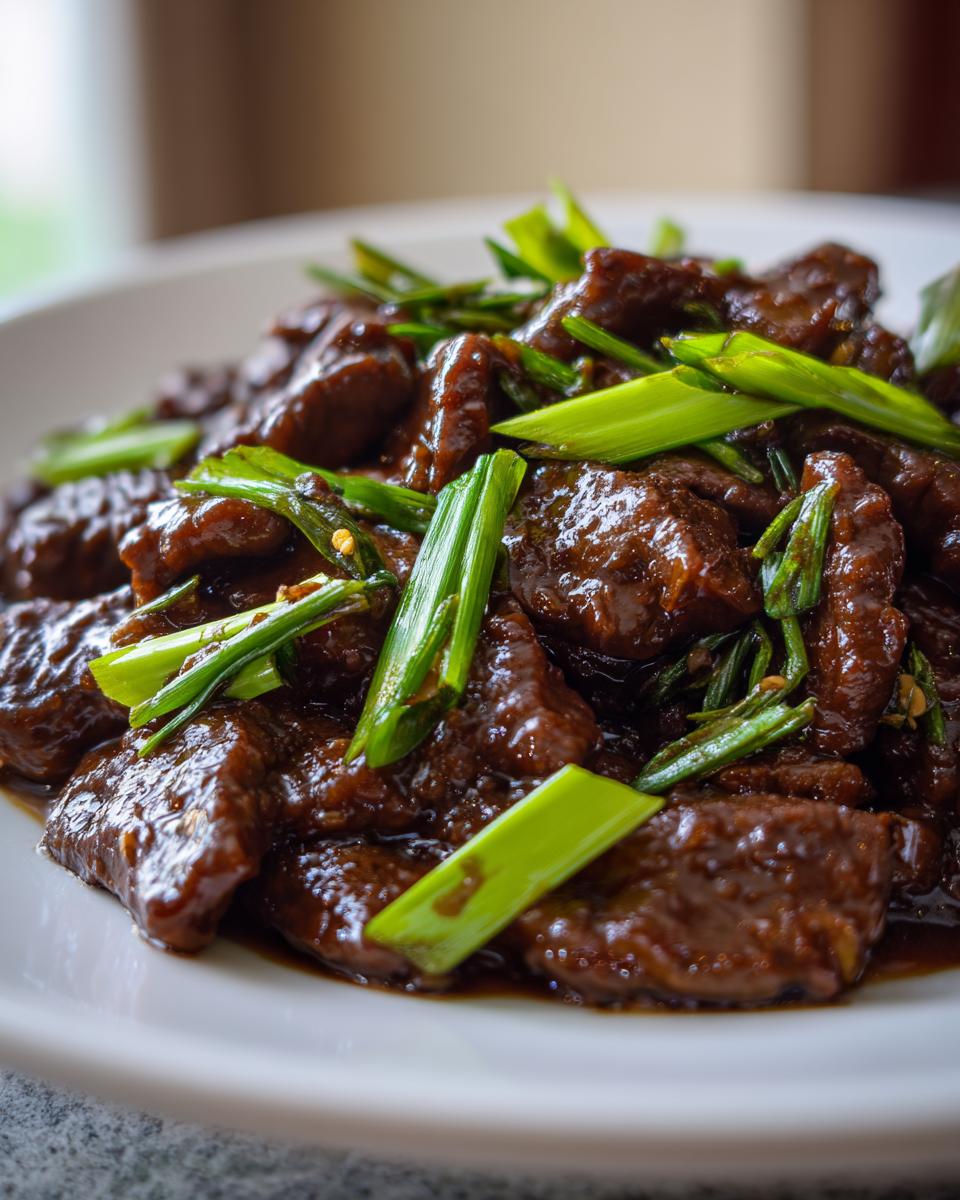
Toss everything gently to make sure every strip of beef gets totally covered in that glorious, glossy mahogany sauce. Cook it for just one final minute to make sure the meat heats all the way through. Before you serve it immediately over rice, stir in those beautiful green tops of the onions for freshness and color. Wow, that smells incredible!
Expert Tips for Next-Level Mongolian Beef
Even though this recipe is super simple, a few little tricks I picked up over the years can really push your Mongolian Beef from “good” to “I can’t believe I made this at home!” territory. You don’t need complicated extra ingredients, most of the time it’s just about timing and preparation.
My number one piece of advice, which I mentioned briefly above but needs repeating, is about how you slice that flank steak. If you don’t slice it thin and you don’t slice it against the grain, you’re guaranteeing that chewy bite, and nobody wants that! Take a moment to identify the direction of the muscle fibers and cut perpendicular to them. If you need a refresher, check out my notes on slicing meat for a good grilled flank steak—it’s the same exact principle here.
Secondly, we talked about kicking up the heat, and you absolutely should if you like a little zing with your savory sweetness! I often drop a teaspoon of chili flakes in the pan right when I’m sautéing the garlic and the white parts of the green onions. It blooms in the hot oil and infuses the whole sauce with a gentle warmth that balances the brown sugar perfectly. Don’t skip this if you like a little spice!
Finally, remember to serve this right away! Stir-fry sauces thickened with cornstarch thicken up even more as they sit, and while they’re still delicious, they don’t have that beautiful, glossy sheen when cold. You want to get that amazing coating right onto hot rice!
Ingredient Substitutions for Your Mongolian Beef
Sometimes the shopping list looks great, but you get home and realize you’re missing that one specific cut of meat, or maybe you’re hosting a friend who eats gluten-free. That’s totally fine! This recipe is wonderfully flexible, even though the standard ingredients give you that classic flavor.
The most common question I get is about the steak itself. If you can’t find flank steak, don’t panic! Skirt steak is a fantastic swap; it has a similar grain, so make sure you slice it thin and against the grain, just like you would with flank. If you happen to have a nice flat iron steak, that works beautifully too. The key is the thin, manual slicing right before cooking.
Now, let’s face the sodium situation or any gluten concerns. If you need a gluten-free version of this easy Asian recipe, the easiest swap is replacing regular soy sauce with tamari. Tamari is just soy sauce made without wheat, and I find the flavor profile is almost identical for pairing with beef and sugar.
If you are cutting back on sodium significantly, you can certainly use low-sodium soy sauce here, but you might need to up the brown sugar by half a teaspoon just to balance out that lost saltiness. Remember, the salt carries the other flavors, so if you lower it, you have to boost something else to keep that sweet and savory profile buzzing.
Serving Suggestions for Your Delicious Mongolian Beef
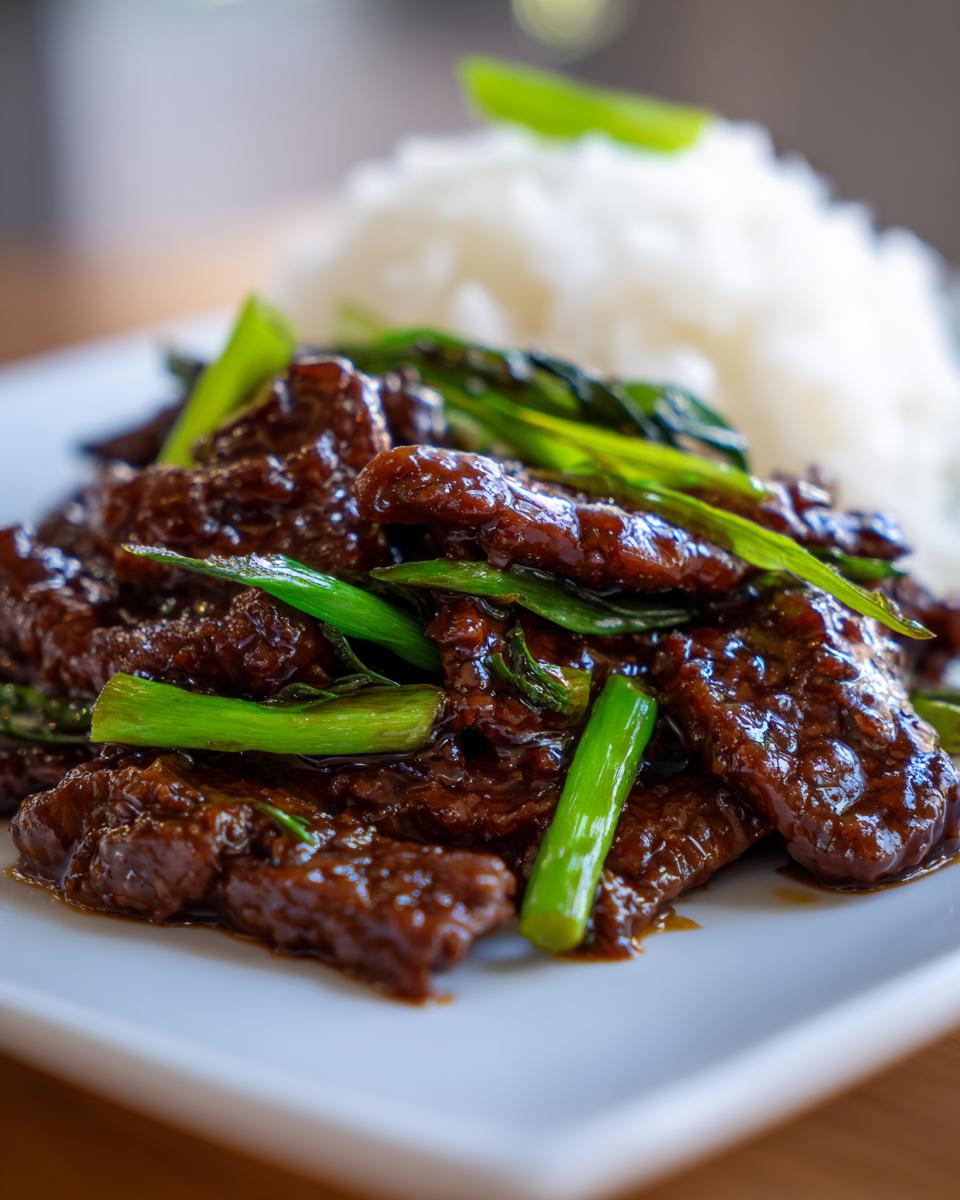
So, you’ve nailed the perfect sear, the sauce is glossy and clinging perfectly, and the smell is taking over your entire kitchen. Perfect! Now we need the perfect stage for this star dish. The recipe notes mention serving this incredible Mongolian Beef right over steamed white rice, and honestly, that’s the classic, can’t-go-wrong presentation.
The rice soaks up all that extra savory sauce that ends up at the bottom of the bowl, which is honestly half the enjoyment, isn’t it? Just keep it simple—fluffy, plain white rice lets that savory, sweet beef shine without any competition.
But if you are trying to make this a full, satisfying family dinner—maybe you doubled the recipe because you know there will be leftovers—you need a crisp, green vegetable. My go-to pairing is always simple steamed broccoli. It adds great texture and color, and it’s so easy to steam while you’re searing the beef.
I steam my broccoli until it’s just tender-crisp, and then, before serving, I drizzle a tiny bit of sesame oil and a splash of soy sauce over it. It complements the rich flavor of the beef without overpowering it! If you’re feeling adventurous and want to make the whole meal Asian-inspired, you could try making a batch of Chinese chicken fried rice instead of plain rice, though that definitely adds a few more minutes to the cook time.
If you’re doing takeout for adults, you absolutely cannot go wrong with a side of crispy egg rolls or maybe some steamed dumplings. That combination of the saucy beef, plain rice, and a crunchy appetizer just feels like a complete, satisfying takeout haul straight from your own stove!
Storage and Reheating Instructions for Leftover Mongolian Beef
Okay, let’s talk about the glorious problem of having leftovers! This recipe makes just two servings, but if you managed to squirrel some of this fantastic Mongolian Beef away for lunch the next day, you’ll want to treat it right. Stir-fries don’t always reheat beautifully, but because we used that cornstarch slurry to thicken the sauce, we have a bit of protection!
The absolute best way to store any leftovers is in a shallow, airtight container. I prefer containers where the food isn’t piled too high, especially if you’re storing it with the rice. You want to get it into the fridge as soon as it cools down a bit—no more than two hours after cooking, honestly.
You can safely keep leftovers for about three days. Any longer than that, and the texture of the beef starts to change, even in the fridge. It’s designed to be eaten fast, you know? Because those sweet, savory flavors really shine when they are fresh!
The Best Way to Reheat Your Beef Stir Fry
Forget the microwave if you want that same great texture back. Microwaving tends to blast the moisture out of the beef, leaving it tough or chewy, and it can steam the onions until they are soggy. We want to revive that satisfying coating, not turn it into mush.
The absolute best method for reheating this Mongolian Beef is back on the stovetop in a skillet or wok. Set your heat medium-low. You don’t need to add extra oil, since the sauce usually has enough residual fat clinging to it.
Add the beef and sauce mixture to the pan. Stir frequently. If it seems way too thick—which can happen when the sauce gels up in the fridge—just splash in a tiny bit of water, maybe a teaspoon at a time, until it loosens up and starts simmering again. Once it’s heated all the way through, it should return to that lovely, glossy texture you loved the first time around!
Tips for Keeping the Onions Crisp on Reheat
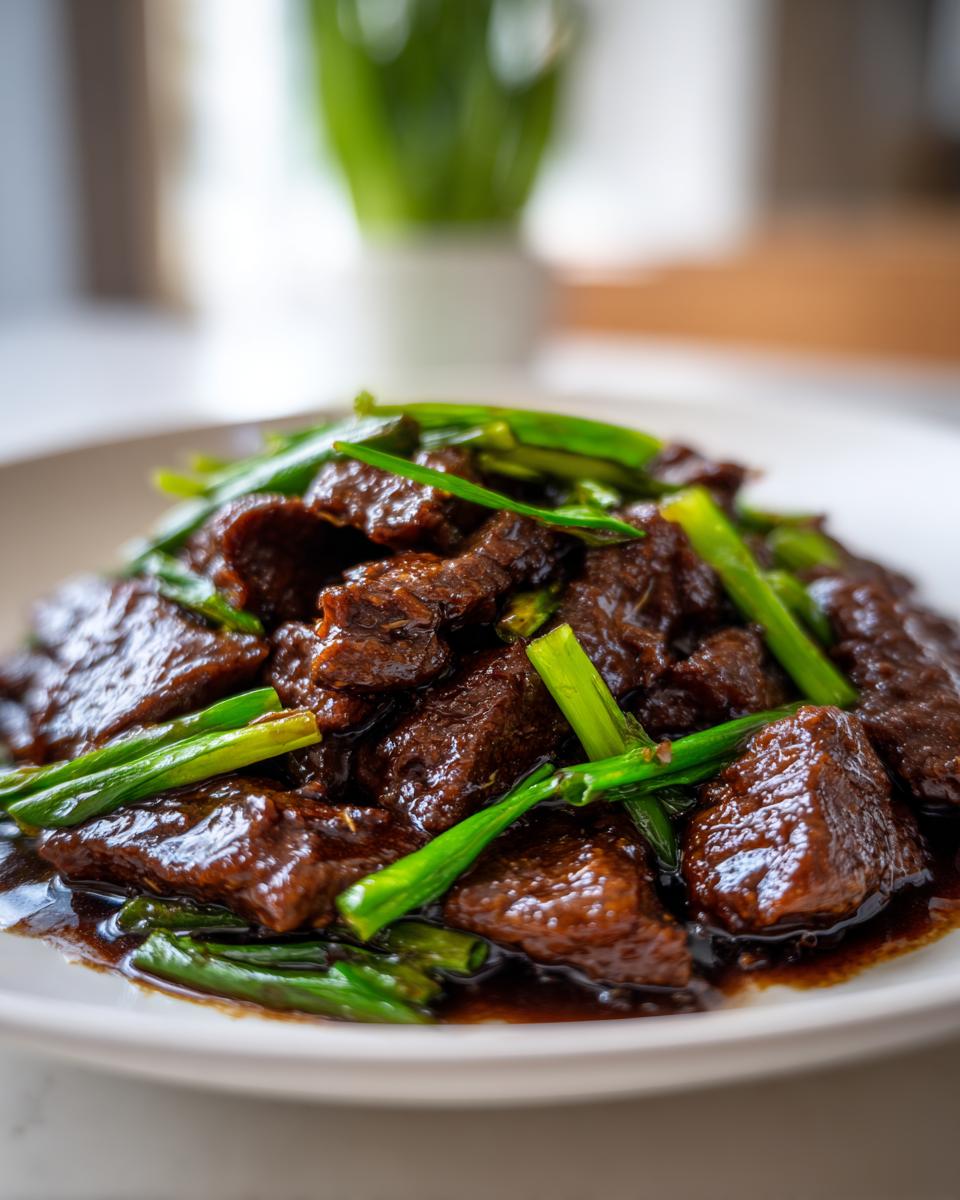
Remember how we added the white parts of the onions earlier and the green parts right at the very end? That separation is your secret weapon for excellent leftovers! The white parts are cooked longer, so they handle reheating just fine.
But the green parts? They wilt fast. If you added all your green onions when you first cooked the dish, they will be totally limp when you reheat it. My tip is this: If you know you’re making extra, hold back about half of the green onions you sliced. Reheat the beef and sauce mixture first, and then, once it’s hot and ready to serve, toss those fresh green onion tops in right at the very end, just like you did the first night. It brings back that fresh color and slight crunch that makes the dish pop!
Frequently Asked Questions About Making Mongolian Beef
I get so many emails asking little clarifying questions about this recipe, especially because stir-frying can feel intimidating if you haven’t done it much. Don’t sweat it! Most issues are super simple to fix once you know the trick. Here are a few of the most common things people ask when they’re making their own easy Asian recipe at home.
Can I use a different cut of beef for this Mongolian Beef recipe?
Oh, absolutely! You don’t have to stress if the store is out of flank steak. Skirt steak is my next favorite choice for this beef stir fry because it has a similar grain structure, meaning it stays tender when sliced thinly against the grain. Flat iron steak is another winner if that’s what you find. The main thing that impacts cooking time isn’t the type of beef as much as how thinly you slice it. Keep everything thin, and the cooking time stays around that speedy 1-2 minutes per side!
How do I make the sauce thicker if it is too thin?
This is usually a sign that the cornstarch didn’t fully incorporate or maybe your heat wasn’t quite high enough when simmering. Don’t panic—fixable! Take the pan off the direct heat for a quick second so it stops boiling madly. In a tiny separate bowl, mix one teaspoon of cornstarch with about two teaspoons of cold water until it’s a smooth paste—we call that a slurry. Then, drizzle that slurry into your sauce a tiny bit at a time, whisking constantly until it thickens right up. A little goes a long way, so be patient!
Is this easy Asian recipe suitable for meal prep?
It holds up pretty well, actually, especially for a quick weeknight meal maker! Because we use cornstarch and brown sugar, the sauce tends to cling nicely rather than soaking into everything else and creating sogginess. The only thing you need to watch is the green onions—they’ll wilt a bit. I suggest cooking the beef and the sauce perfectly, letting it cool, and storing it separately from the rice if you’re meal prepping more than two days out. If you are looking for other great make-ahead meals, check out my beef burrito bowls, which hold their texture brilliantly.
Nutritional Estimates for Simple Mongolian Beef
Now, I always say that cooking for yourself means you control what goes into your body, which is a huge win! But, since we’re using soy sauce and brown sugar, this isn’t exactly a low-sodium diet food, so keep that in mind when you’re diving in!
These numbers are just my best guess based on the standard ingredients I use in my kitchen for this recipe. Different brands of soy sauce especially can really swing the sodium count, so take these as a general guideline rather than a hard guarantee, okay?
For one serving of this glorious Mongolian Beef, here’s roughly what you’re looking at:
- Serving Size: 1 serving
- Calories: 450
- Protein: 45 grams (That’s great for a beef dish!)
- Total Fat: 20 grams
- Saturated Fat: 4 grams
- Carbohydrates: 25 grams
- Sugar: 12 grams
- Fiber: 1 gram
- Sodium: 950 mg (Yep, that’s the soy sauce talking!)
It’s a really hearty meal, especially with all that protein. If you are keeping an eye on your sodium, remember that trick I mentioned earlier about swapping in low-sodium soy sauce. It might bump the sugar up a tiny bit because you lose some of that flavor balance, but if your doctor is watching your salt intake, it’s a manageable adjustment for this dish!
Print
Simple Mongolian Beef
- Total Time: 25 min
- Yield: 2 servings 1x
- Diet: Low Lactose
Description
A straightforward recipe for making savory Mongolian Beef at home.
Ingredients
- 1 pound flank steak, thinly sliced against the grain
- 1/4 cup soy sauce
- 1/4 cup water
- 2 tablespoons brown sugar
- 1 tablespoon cornstarch
- 1 tablespoon sesame oil
- 1 teaspoon ground ginger
- 2 cloves garlic, minced
- 1 tablespoon vegetable oil
- 1 cup sliced green onions, white and green parts separated
Instructions
- In a medium bowl, whisk together soy sauce, water, brown sugar, cornstarch, sesame oil, and ginger. Set aside.
- Heat the vegetable oil in a large skillet or wok over medium-high heat.
- Add the sliced steak to the skillet in a single layer. Cook for 1-2 minutes per side until browned. Remove the steak and set aside.
- Add the minced garlic and the white parts of the green onions to the skillet. Cook for 30 seconds until fragrant.
- Pour the reserved sauce mixture into the skillet. Bring to a simmer, stirring constantly until the sauce thickens, about 1 minute.
- Return the cooked steak to the skillet. Toss to coat the beef evenly with the sauce.
- Cook for 1 minute until the beef is heated through.
- Stir in the green parts of the green onions before serving.
Notes
- Serve immediately over steamed white rice for a complete meal.
- For extra flavor, you can add a teaspoon of chili flakes with the garlic.
- Prep Time: 15 min
- Cook Time: 10 min
- Category: Dinner
- Method: Stir-Frying
- Cuisine: Asian
Nutrition
- Serving Size: 1 serving
- Calories: 450
- Sugar: 12
- Sodium: 950
- Fat: 20
- Saturated Fat: 4
- Unsaturated Fat: 16
- Trans Fat: 0
- Carbohydrates: 25
- Fiber: 1
- Protein: 45
- Cholesterol: 110
Keywords: Mongolian Beef, beef stir fry, easy Asian recipe, flank steak